Full Shingle Roof Replacement on a Classic Northeast Home
Most roofs don't fail all at once. They fade slowly - a missing shingle here, a small leak there - until one storm makes the problem impossible to ignore. By that point, the damage has usually spread well beyond the roof itself.
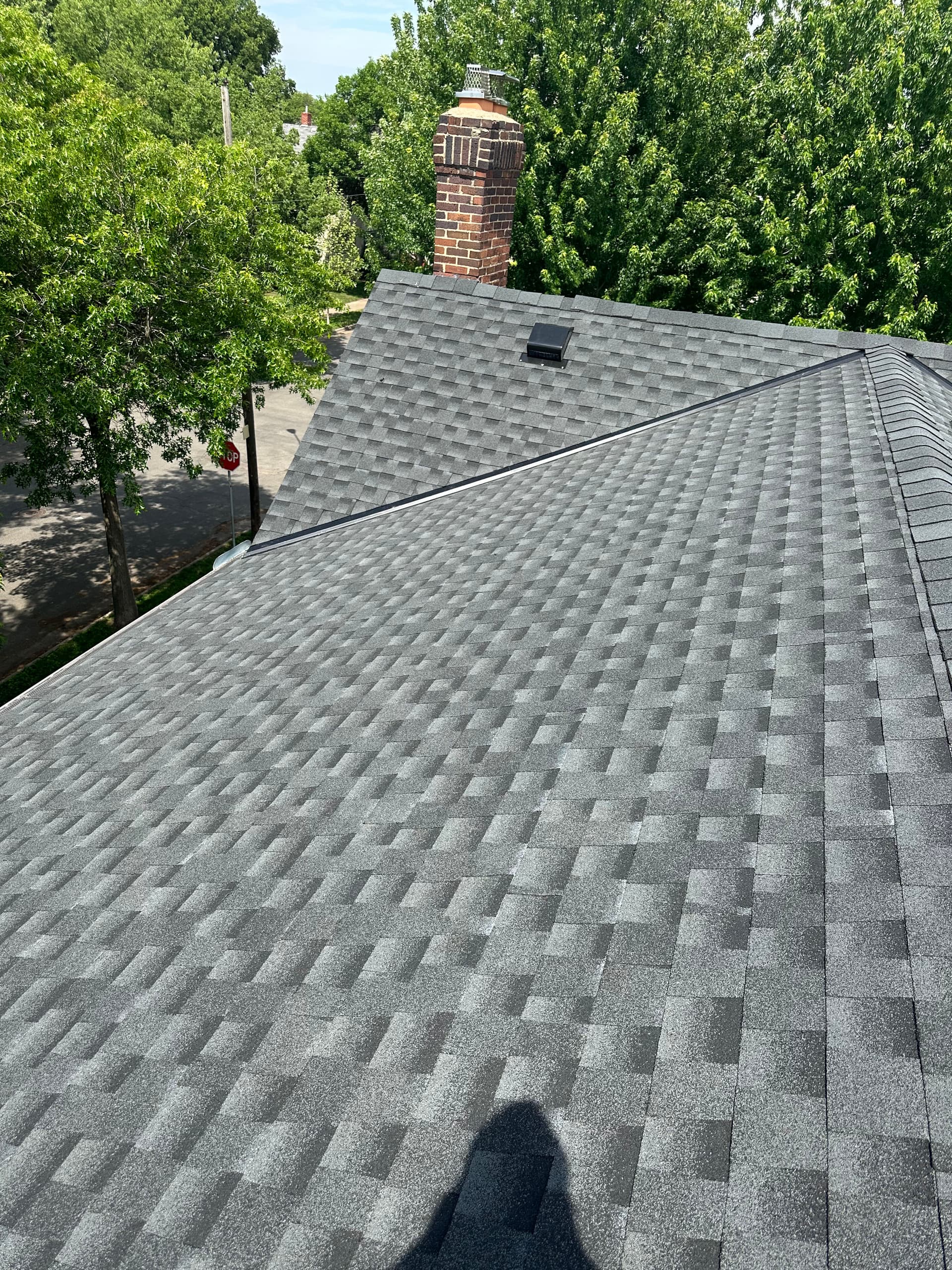
This was a full shingle roof replacement on a classic Northeast home with a multi-pitch roofline and an existing brick chimney. These older homes have character, but they also have complexity. Getting the shingle layout right across multiple planes takes real attention to detail, and the ridge lines have to be tight.
We used a charcoal gray architectural shingle that suits the style of the home without looking out of place in the neighborhood. Architectural shingles are thicker than standard 3-tab, they sit better, and they hold up against the kind of weather Northeast homes deal with every season - summer heat, fall wind, winter ice, and spring rain. They're not all the same, and the quality of the install matters just as much as the product.
The roof vent was properly integrated into the field of the shingles, and the ridge cap was finished clean from end to end. Those details aren't always visible from the street, but they're exactly the kind of things that determine how long a roof actually lasts. A good-looking roof that was installed carelessly will still fail early.
If your roof is showing its age - curling edges, granule loss, or just a lot of years on it - getting ahead of it now is almost always cheaper than waiting. A small problem on a roof is never really small for long.